


Craps

- 1The Craps Table Layout — What Each Section Actually Means
- 2How to Play Craps — The Two Phases Every Round Goes Through
- 3Every Play Type Ranked by House Edge — What to Use and What to Skip
- 4How to Play Craps on Lavish Luck — Getting Set Up
- 5How to Play Craps and Win: The Best Strategy
- 6Craps Slot Machine vs. The Real Table — What's Different on Screen
- 7Frequently Asked Questions
Craps has a reputation for being the loudest, most chaotic table in any casino. Watch a live table from a distance and you'll see fifteen people reacting to the same two dice at the same moment — cheering, groaning, calling numbers. From the outside it looks random and frantic. Once you know the structure, it turns out to be one of the most strategically interesting table games available. Some plays carry a house edge under 1.5%. Others sit above 16%. The difference matters, and knowing which is which changes the entire experience.
The craps slot machine version on Lavish Luck brings that same table game structure to your screen — full layout, all play types, same dice probabilities, same two-phase round structure — playable free using your daily Gold Coins whenever you want. Whether you are learning how to play craps for the first time or you already know the table and want to play craps online without any pressure, this is the right starting point.
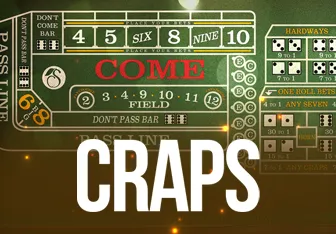
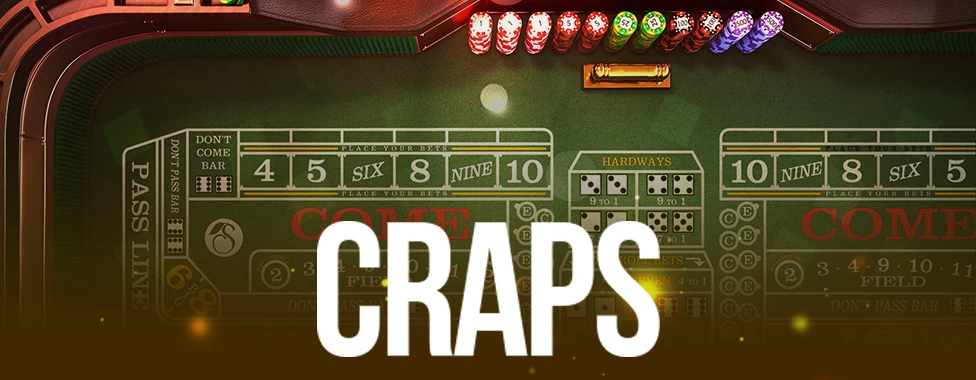
The Craps Table Layout — What Each Section Actually Means
The craps table looks dense because it offers a lot of options at once. But the layout follows a logical structure, and each section exists for a specific reason.
Pass Line — the long strip running the full length of the table. This is the most fundamental play in craps and the one most players make on every round. You place your coins here before the Come Out roll. Pass Line goes with the shooter.
Don't Pass Bar — sits directly beside the Pass Line. This is the opposite play. Don't Pass plays win when Pass Line plays lose. Both carry the lowest house edge on the table.
Come and Don't Come — work exactly like Pass and Don't Pass in terms of odds and rules, but you place them after the Come Out roll once a point has been established. A Come play effectively starts its own mini round within the ongoing round.
Point Number Boxes (4, 5, 6, 8, 9, 10) — the large numbered boxes across the centre of the table. After a point is established, you can place coins directly on specific numbers here. If that number rolls before a 7, you collect. Place plays on 6 and 8 carry the best odds of any number-specific play.
The Field — a wide section covering numbers 2, 3, 4, 9, 10, 11, 12. Field plays resolve on every single roll and do not carry over. They look appealing because of how many numbers are covered. The house edge is higher than Pass Line and Place plays on 6 and 8.
Proposition Plays — the centre section of the table, covering specific dice combinations like double 1 (snake eyes), double 6 (boxcars), any 7, and hardways. These resolve on a single roll. High displayed return rates. Very high house edge. The section the house benefits from most.
When you play craps online on Lavish Luck, the digital table mirrors this layout exactly. Every area is labelled and interactive. Knowing the physical layout first makes the digital version immediately intuitive.
How to Play Craps — The Two Phases Every Round Goes Through
Learning how to play craps starts with understanding that every round has two distinct phases. The Come Out roll opens the round. The Point phase follows if the Come Out roll does not immediately resolve.
Phase One — The Come Out Roll
The shooter throws both dice. Three possible outcomes:
- Natural (7 or 11): Pass Line wins immediately. Don't Pass loses. The round ends and a new Come Out roll begins.
- Craps (2, 3, or 12): Pass Line loses immediately. Don't Pass wins (with one exception — a 12 is a push on Don't Pass, meaning no result either way). The round ends and a new Come Out roll begins.
- Any other number (4, 5, 6, 8, 9, or 10): That number becomes the Point. A marker moves to that number on the table. Phase Two begins.
Phase Two — The Point Phase
Rolling continues until one of two things happens:
- The Point number rolls again: Pass Line wins. Don't Pass loses. Round ends, new Come Out begins.
- A 7 rolls: Called a Seven Out. Pass Line loses. Don't Pass wins. Round ends, dice move to the next shooter.
That is the complete core of how do you play craps with dice. Every other play type — Come plays, Place plays, Odds, Field, Propositions — layers on top of this two-phase foundation without changing it.
Every Play Type Ranked by House Edge — What to Use and What to Skip
Not all craps plays work the same way mathematically. The house edge varies dramatically by play type.
Pass Line — House Edge: 1.41% Place your coins before the Come Out roll. You win on naturals (7 or 11), lose on craps (2, 3, 12), and root for your point to repeat during Phase Two. The best long-term play for anyone learning how to play craps and win.
Don't Pass — House Edge: 1.36% Slightly better than Pass Line mathematically. You are playing against the shooter — winning when they seven out, losing when they hit their point. The logic is identical to Pass Line but in reverse.
Odds Plays (behind Pass Line or Don't Pass) — House Edge: 0% Where available in the craps machine version you're playing, Odds plays are placed behind an active Pass Line or Don't Pass play after a point is established. These are the only zero-edge plays in any table game. Returns are calculated using true mathematical odds based on the actual probability of the point number repeating before a 7. Always use them when the game offers them.
Come / Don't Come — House Edge: 1.41% / 1.36% Identical to Pass and Don't Pass in edge and rules. Placed after the Come Out roll. A Come play needs a natural to win, craps to lose, or establishes its own point. Useful for covering multiple numbers simultaneously during a long point phase.
Place Play on 6 or 8 — House Edge: 1.52% After the point is established, a Place play on 6 or 8 wins if either number rolls before a 7. The 6 and 8 are each produced by five of the 36 possible dice combinations — second only to 7, which uses six. Low edge, frequently active numbers.
Place Play on 5 or 9 — House Edge: 4.0% Usable but noticeably higher edge than 6 and 8. Both numbers come up four ways out of 36.
Place Play on 4 or 10 — House Edge: 6.67% These come up three ways out of 36. The edge is high enough that most experienced craps players leave these alone or skip them entirely.
Field — House Edge: 2.78% to 5.56% Covers a wide range of numbers but resolves on every roll. The edge depends on whether the table rewards 2x or 3x on the 12. More house edge than Pass or 6/8 Place plays.
Proposition Plays — House Edge: 9.09% to 16.67% Snake eyes, boxcars, any 7, any craps, hardways. All resolve on a single roll. The centre of the craps table is where the casino makes the most margin. The displayed return rates look exciting. The actual edge is brutal. These are best left alone.
How to Play Craps on Lavish Luck — Getting Set Up
Play craps online free on Lavish Luck in a few clear steps:
Step 1 — Open the Game Navigate to the Craps game page and launch it. The full table loads with all play areas visible and labelled — Pass Line, Don't Pass, Come, Don't Come, number boxes, Field, and Proposition plays in the centre. Take a moment to locate each section before placing anything.
Step 2 — Select Your Coin Value Use the chip selector at the bottom of the screen to choose your denomination. Smaller amounts let you explore multiple play areas simultaneously without putting too many coins on any single outcome.
Step 3 — Place Your Coins Click or tap the area you want to play. The most natural starting place is the Pass Line. Your chips appear on the area you selected. You can cover multiple sections in a single round.
Step 4 — Roll Press the Roll button. Both dice animate and land on a result. All active plays are evaluated simultaneously. Winning plays are highlighted and coins are added to your total. Losing plays are cleared.
Step 5 — Continue or Start Fresh If the Come Out roll established a point, the table shows the active point number. Continue placing Come plays or Place plays if you want more coverage, then roll again. If the round resolved (natural, craps, seven out, or point repeated), a new Come Out round opens automatically.
Step 6 — Add Odds When Available If the version of craps on Lavish Luck offers Odds plays behind the Pass Line, place them after the point is established. These add coverage at zero house edge — the most efficient move available on any craps table.
How to Play Craps and Win: The Best Strategy
The honest answer to how to play craps and win is to play the right areas of the table, keep your total coins on low-edge plays, and let the math work over time. There is no system that overcomes house edge, but there is a meaningful difference between playing intelligently and playing randomly.
Always start on Pass Line or Don't Pass. These are the foundation. Every session starts here. Edge under 1.41%.
Take every Odds play that is available. Zero house edge. You are extending your Pass Line or Don't Pass play at the most favourable rate the game offers.
After the point is set, consider Place plays on 6 and 8. These two numbers are active in almost every extended point phase. At 1.52% edge they are the most efficient number-specific plays on the table.
Leave the Proposition plays alone. The centre of the table is the casino's highest-margin territory. Looking at it is fine. Placing there consistently is expensive over time.
Think in terms of total coins per session, not per roll. Craps can move fast — rounds resolve quickly and new Come Out rolls follow immediately. Deciding your session total in advance and choosing a denomination that lets you play for the length of session you want produces a more consistent experience than making large, reactive plays on individual rolls.
Craps Slot Machine vs. The Real Table — What's Different on Screen
When people search for a craps slot machine or craps slot, they usually mean one of two things: a digital version of the traditional craps table, or a slot machine that uses dice imagery as decoration. The Craps game on Lavish Luck is the first type — a fully structured digital table game, not a spinning reel slot.
The dice outcomes on a digital craps machine are produced by a random number generator calibrated to the same probability distribution as physical dice. A 7 appears in exactly six of 36 possible combinations. The 6 and 8 each appear in five. The 4 and 10 each appear in three. The probabilities are identical to a physical table.
What is different from a live game is the environment. On a physical craps table there are other players reacting to the same roll, a pace set by the table rather than you, and social pressure around when and how you place. On a digital table on Lavish Luck, you roll when you choose. You can look at the layout as long as you want. You can try a Come play for the first time without explaining it to anyone. For players learning how to play craps machine versions — and building the mechanical understanding that transfers to a live table — the digital version removes every friction point that is not the game itself.
Frequently Asked Questions
Start with one play: the Pass Line. Place your coins on the Pass Line before the Come Out roll. If the roll is 7 or 11, you win immediately. If it is 2, 3, or 12, you lose immediately. Anything else (4, 5, 6, 8, 9, or 10) becomes your point, and rolling continues until either the point repeats (you win) or a 7 appears first (you lose). That is the entire foundation of the game — everything else builds on top of it.
On two dice, there are 36 equally likely combinations. The number 7 can be made six different ways — more than any other total — which is why it is both the best Come Out roll result and the worst outcome once a point is established. The numbers 6 and 8 can each be made five ways, making them the most likely point numbers to repeat before a 7. The 4 and 10 can each be made only three ways, making them the hardest point numbers to hit.
Pass Line and Don't Pass are the best starting plays (1.41% and 1.36% edge respectively). If Odds plays are available behind them after the point is established, those are the best plays on the entire table — zero house edge, paid at true mathematical probability.
Yes. Come plays are placed after the Come Out roll has established a point, and they work as independent mini-rounds alongside the main point phase. You can have an active Pass Line play on the main point and one or more Come plays on different numbers simultaneously. Each resolves on its own terms — a 7 wins your Don't Come plays while ending the main round and losing your Pass Line.
Yes. Play craps online free using Gold Coins (GC), given out at no cost every day. Sweeps Coins (SC) are also always free, arriving through daily gifts and promotions — SC are never purchased. Any SC accumulated through play can be redeemed for prizes. If you would like more GC for fun, additional GC Offers are available to purchase at any time.